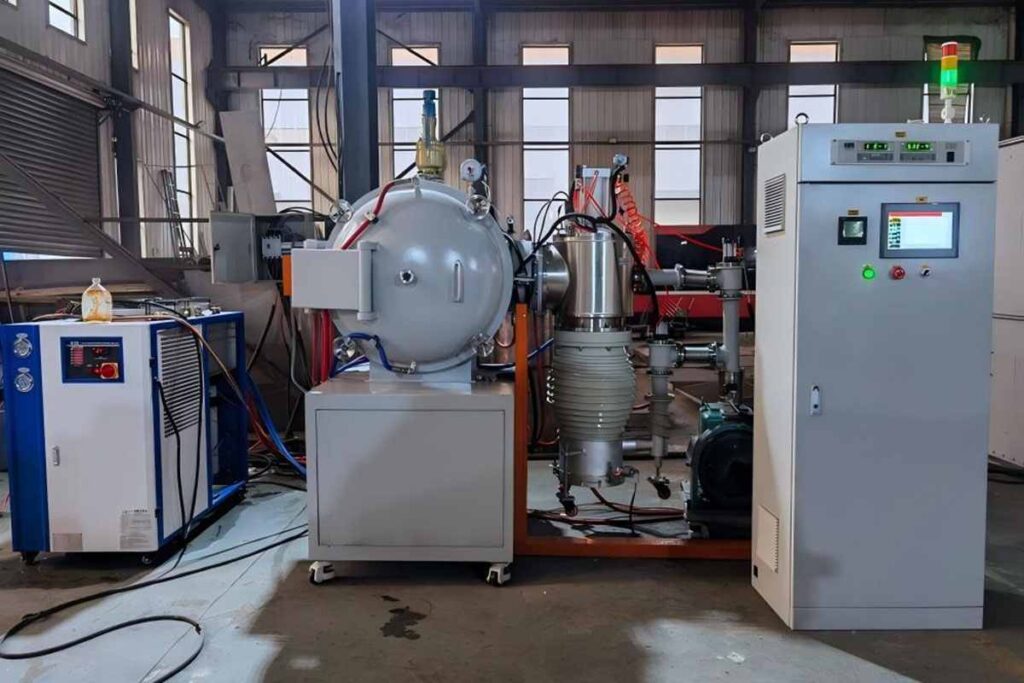
Every successful industrial heat treatment process begins as an experiment. A researcher identifies an optimal temperature profile, a protective atmosphere, and a thermal cycle in the laboratory using a small tube or muffle furnace. The results are promising — the material properties are excellent, the process is repeatable, and the application is validated.
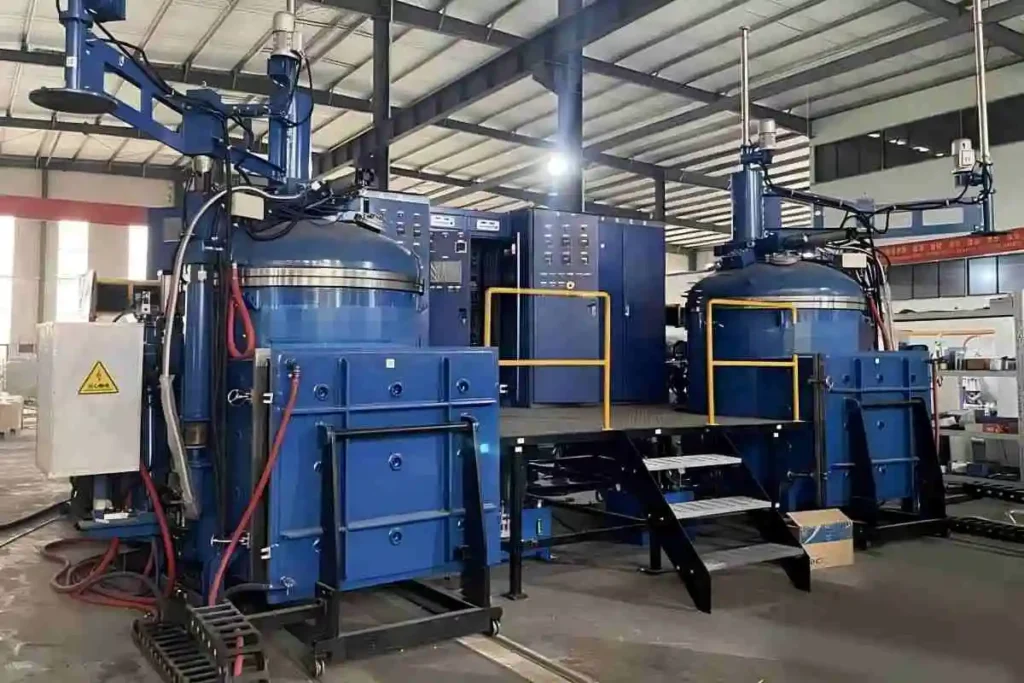
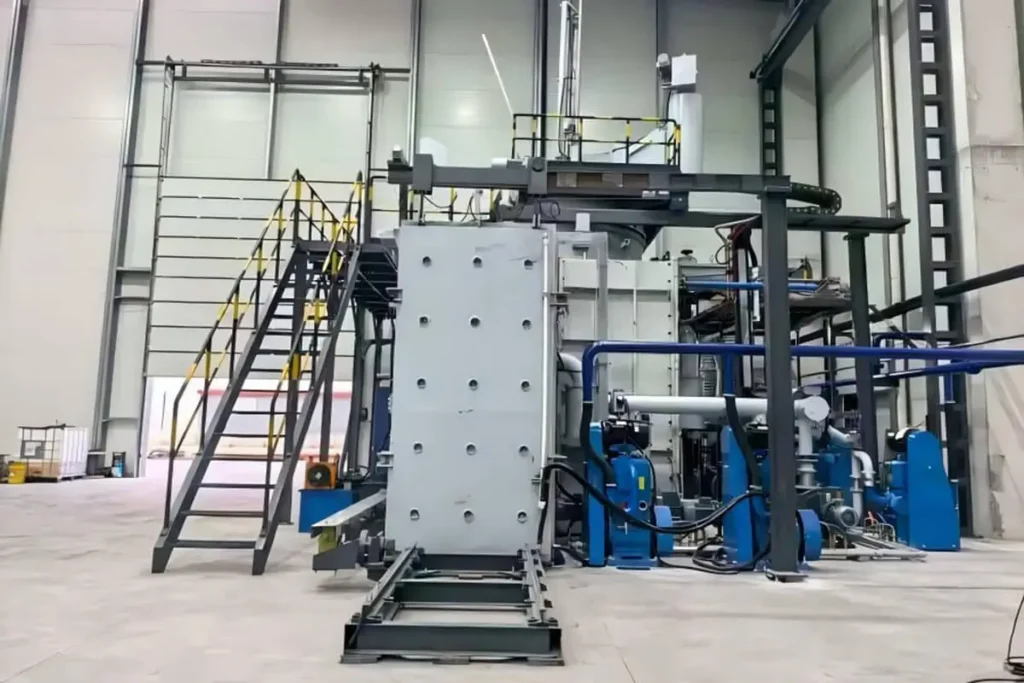
Then comes the hard part: scaling up to production. Moving from a lab-scale furnace to an industrial vacuum furnace or continuous atmosphere furnace is not simply a matter of making everything bigger. It requires careful consideration of thermal uniformity, atmosphere control, loading configurations, cycle time optimization, and quality assurance. This guide walks you through the key steps and pitfalls of the scale-up process.
Step 1: Understand What Made the Lab Process Work
Before attempting to scale up, it is essential to fully characterize your lab process. Document the exact time-temperature profile, including ramp rates, hold temperatures, hold durations, and cooling rates. Record the gas atmosphere composition, flow rates, and any dew point or oxygen potential measurements. Note the sample loading configuration, including orientation, spacing, and the container or boat used.
The lab furnace you used will have a specific temperature uniformity profile that may differ significantly from the production furnace. Understanding which aspects of the lab process are critical — versus which can tolerate variation — will inform your scale-up strategy.
Step 2: Define Your Production Requirements
Scale-up requires clear production targets. How many parts do you need to process per hour, per day, or per week? What is the maximum acceptable cycle time? What are the quality tolerances — in terms of hardness, microstructure, dimensional change, or surface finish — that the production parts must meet? What is your budget for capital equipment and ongoing operating costs?
These parameters will guide the selection of production furnace type. High-volume, continuous production of similar parts often favors continuous conveyor-belt furnaces or pusher furnaces. Lower volume, high-mix production of diverse parts typically benefits from batch-type vacuum or atmosphere furnaces with flexible programming.
Step 3: Address Thermal Uniformity Challenges
One of the most significant challenges in scale-up is maintaining the temperature uniformity achieved in the lab at production scale. A small lab furnace may have a single heating zone maintaining temperature within ±5°C across a 150mm hot zone. A production furnace with a 1-meter or larger hot zone may require multiple independently controlled heating zones to achieve the same uniformity.
Work with your furnace manufacturer to obtain the temperature uniformity data for the production furnace under your specific load conditions. Request AMS 2750 temperature uniformity surveys if your process requires it. Consider the impact of load density on uniformity — a dense load of parts absorbs heat differently from an empty furnace, and this must be accounted for in cycle development.
Step 4: Scale the Atmosphere System
Gas atmosphere control that worked perfectly in a small lab tube furnace may need significant redesign for production scale. Flow rates must be increased proportionally to maintain the same gas velocity and atmosphere composition across a larger chamber. Gas purity requirements remain the same — or become even more critical — because a larger chamber means more potential for atmospheric contamination from leaks or outgassing of fixtures.
For hydrogen or other flammable gas applications, the safety systems — including gas detection, automatic shutoffs, purging sequences, and burn-off systems — must be engineered to match the scale of gas usage. Consult with safety engineers and local regulatory authorities to ensure compliance.
Step 5: Validate the Production Process
Before committing to full production, conduct a formal process validation. Run a series of qualification loads that represent the range of parts you will process in production. Measure all critical quality parameters and compare them to the lab benchmark. Document the results and establish process specifications — the controlled input parameters (temperature, atmosphere, cycle time) and the acceptance criteria for output quality.
Process validation is also the time to identify and resolve any unexpected scale-up effects. Common issues include longer soak times needed to fully heat a dense load, changed cooling rates due to larger thermal mass, and different surface chemistry responses due to the increased chamber volume-to-surface area ratio.
Step 6: Establish Process Control and Monitoring
A validated production process is only valuable if it remains in control. Implement a process monitoring system that continuously records temperature, atmosphere composition, and cycle data for every production run. For regulated industries such as aerospace or medical devices, this data must be stored and traceable to individual parts or batches.
Statistical process control (SPC) techniques — tracking key parameters over time and setting control limits — can help you detect process drift early, before it results in out-of-specification parts.
Conclusion
Scaling a heat treatment process from lab to production is a methodical, multi-step journey that rewards careful planning and thorough documentation. By fully characterizing your lab process, clearly defining production requirements, addressing thermal uniformity and atmosphere control challenges, rigorously validating the production process, and implementing robust monitoring, you can successfully transfer the quality achieved in the lab to the factory floor.