Sintering is one of the most important and versatile manufacturing processes in modern industry. From the metal gears in your car to the ceramic components in cutting tools and the electrodes in lithium-ion batteries, sintered parts are everywhere — even if most people have never heard the term. Understanding sintering is essential for anyone working in materials science, powder metallurgy, ceramics, or additive manufacturing.
This beginner’s guide explains what sintering is, how it works, why it matters, and what furnace capabilities are required to do it well.
What Is Sintering?
Sintering is a thermal process in which a powder compact — a mass of fine particles pressed into a desired shape — is heated to a temperature below the melting point of the material. At this elevated temperature, atomic diffusion occurs at the particle surfaces and interfaces, causing the individual powder particles to bond together and form a dense, strong solid.
The key distinction from melting is that sintering does not require the material to become liquid. Instead, solid-state diffusion — the migration of atoms through a crystalline lattice driven by thermal energy — gradually eliminates the pores between particles and builds strong inter-particle bonds. The result is a part with controlled density, fine microstructure, and mechanical properties approaching — or in some cases exceeding — those of conventionally manufactured parts.
The Sintering Process: Step by Step
The sintering process typically consists of several stages. In the initial stage, the powder compact is heated slowly to allow binder or lubricant materials — added to the powder during compaction — to burn off cleanly without leaving carbon residue or causing defects. This stage, often called debinding or dewaxing, typically occurs at temperatures between 300–600°C.
In the intermediate stage, the furnace ramps to the sintering temperature, which may range from 800°C to over 2,000°C depending on the material. At this temperature, necks form between adjacent powder particles, pores begin to close, and the part begins to densify and shrink.
In the final stage, the part is held at sintering temperature for a defined dwell time to allow diffusion to continue and the microstructure to reach the target density and grain size. Finally, the part is cooled at a controlled rate to prevent cracking or undesirable phase transformations.
Materials Processed by Sintering
Sintering is applicable to an extraordinary range of materials. Metal powders processed by sintering include iron, steel, copper, bronze, stainless steel, tungsten, molybdenum, titanium, and nickel-based superalloys. The powder metallurgy (PM) industry uses sintering to produce millions of structural components for automotive, appliance, and industrial machinery applications every year.
Ceramic sintering is equally important. Advanced ceramics such as alumina, zirconia, silicon carbide, silicon nitride, and hydroxyapatite (for medical implants) are shaped as green compacts and sintered to full density. The dental industry uses sintering extensively to produce zirconia crowns and bridges with excellent aesthetics and strength.
Cemented carbides — the cutting tool materials composed of tungsten carbide particles bonded by a cobalt metal matrix — are produced by liquid-phase sintering, where the cobalt melts and flows between the carbide particles, achieving full density and exceptional hardness.
Furnace Requirements for Sintering
The furnace requirements for sintering are determined by the material being processed, the atmosphere needed, and the peak temperature required.
For iron and steel PM parts sintered in a nitrogen-hydrogen atmosphere at temperatures of 1,100–1,300°C, a continuous mesh belt atmosphere furnace is the standard production solution. These furnaces offer high throughput, consistent atmosphere control, and low operating cost per part.
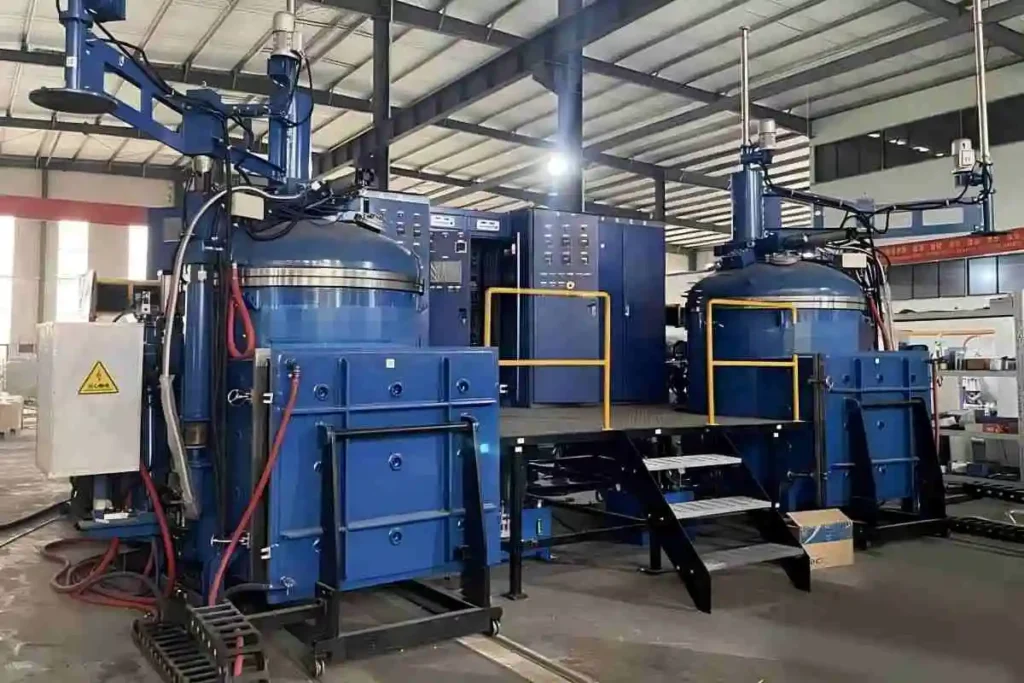
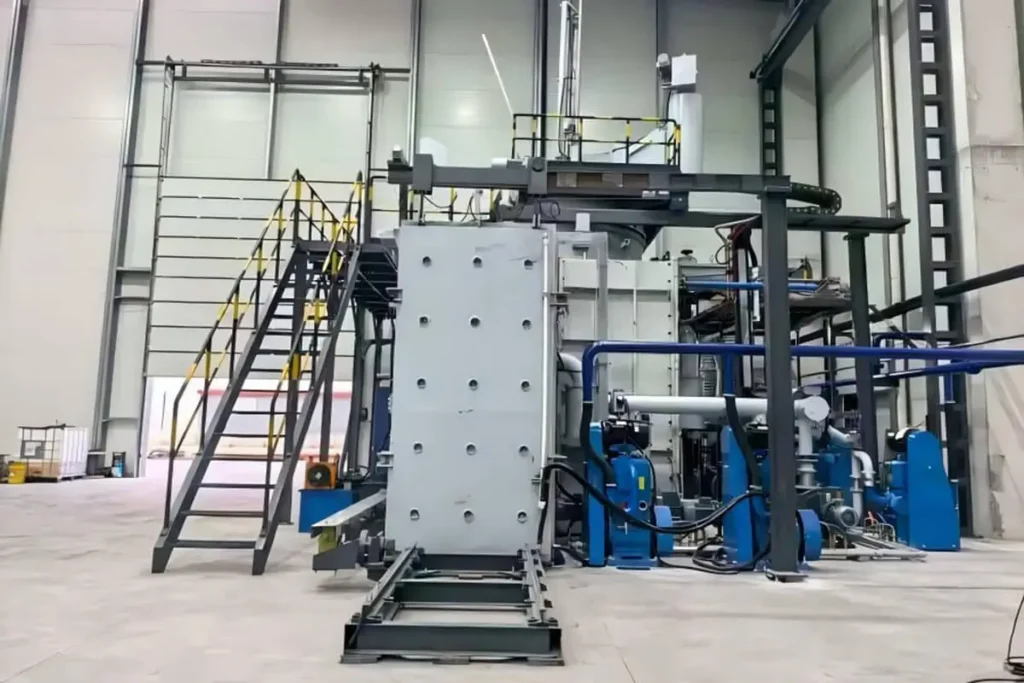
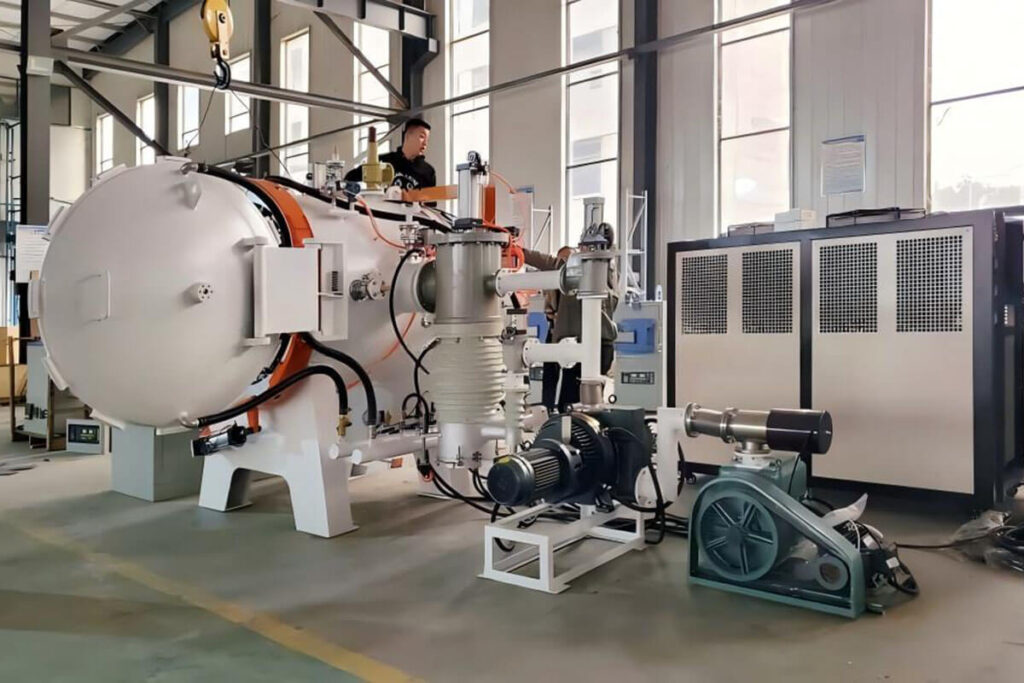
For titanium, tungsten, molybdenum, and other reactive or refractory metals, a vacuum furnace is essential. Titanium in particular reacts with nitrogen, oxygen, and hydrogen at sintering temperatures, making vacuum the only suitable processing environment. Vacuum furnaces for titanium sintering must achieve ultimate pressures below 10⁻³ mbar and maintain this level throughout the high-temperature dwell.
For ceramic sintering, the requirements depend strongly on the material. Alumina and zirconia can be sintered in air atmosphere in a conventional muffle furnace, often with top temperatures of 1,450–1,600°C. Silicon carbide and silicon nitride require sintering in inert or nitrogen atmospheres at temperatures up to 2,000°C or above, requiring specialized high-temperature atmosphere furnaces or hot press systems.
Key Furnace Parameters
Regardless of the specific furnace type, several parameters are critical for successful sintering outcomes. Temperature uniformity within the sintering zone directly controls density uniformity across the part. Atmosphere control — whether vacuum level, gas purity, dew point, or carbon potential — determines the surface chemistry and microstructure of the sintered part. Heating and cooling rates must be carefully managed to control grain growth, prevent thermal shock, and ensure complete binder removal in the debinding stage.
Conclusion
Sintering is a foundational process in modern manufacturing that transforms simple metal and ceramic powders into high-performance components. As industries from automotive to medical devices to batteries continue to expand their use of sintered materials, the demand for precise, reliable sintering furnaces — whether vacuum, atmosphere, or muffle-type — will continue to grow. For manufacturers and researchers working with powder materials, understanding sintering fundamentals is the first step toward optimizing furnace selection and process design.